- Call us free 24/7 : +447510000058
Discover the perfect blend of elegance and durability with our Luxury Vinyl Tile (LVT) flooring. Designed to replicate the natural beauty of wood and stone, LVT offers a premium look with minimal maintenance. Explore our wide range of styles, colours, and finishes—including popular herringbone and stone-effect designs—crafted to suit every space. Whether for your home or commercial project, T-Build offers high-quality LVT flooring UK customers can rely on.


How to Lay Herringbone LVT (Luxury Vinyl Tiles) – A Complete DIY Guide
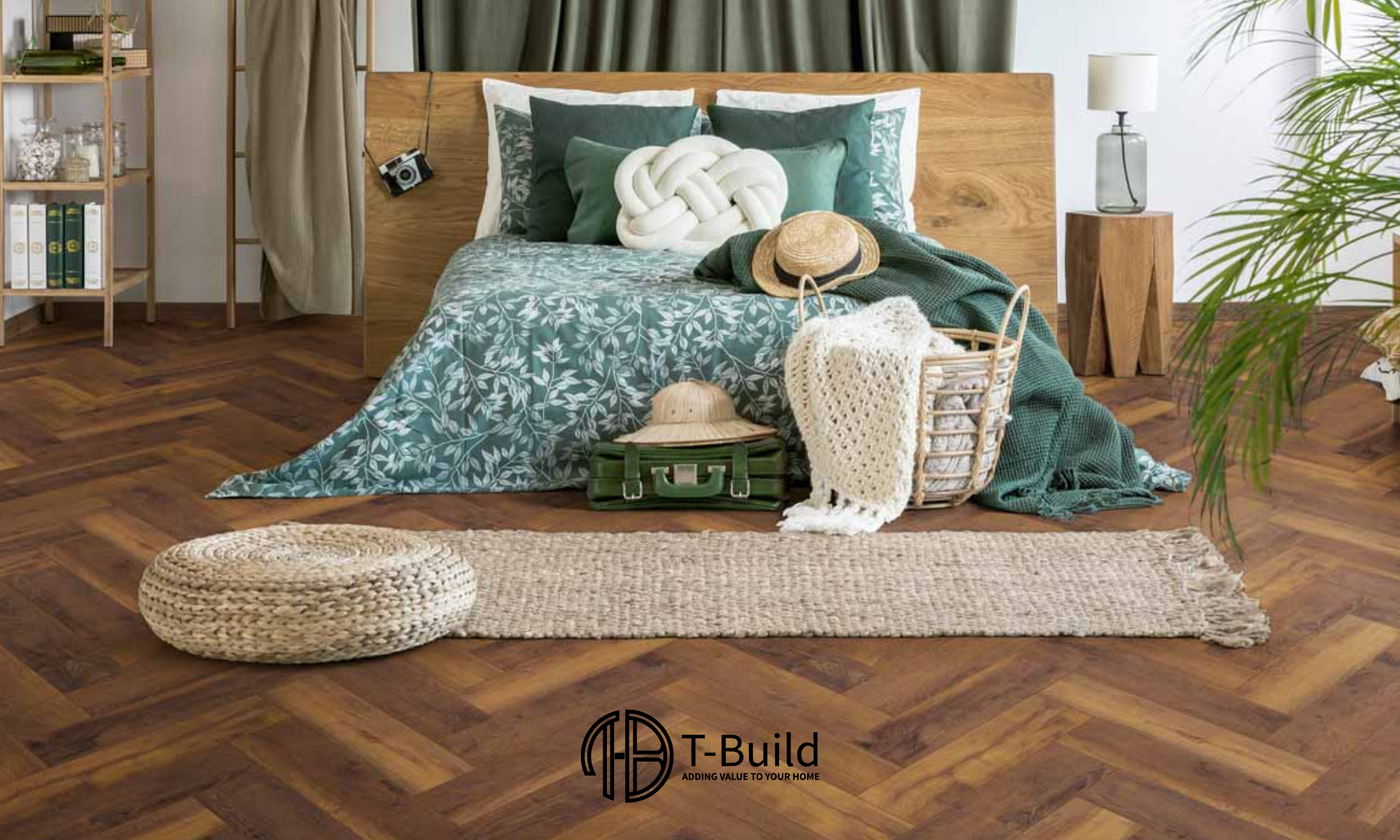
Herringbone LVT (Luxury Vinyl Tiles) is one of the most stylish and on-trend flooring options for modern homes and commercial spaces. Its zigzag pattern brings a touch of elegance and visual interest to any room, mimicking the look of traditional parquet flooring—but at a fraction of the cost.
Click here to check out our full Herringbone range.
In this guide, the flooring experts at T-Build UK show you exactly how to lay herringbone LVT for a professional-looking finish, even if you’re tackling the job yourself.
Why Choose Herringbone LVT?
Stylish & Modern: Perfect for both contemporary and classic interiors.
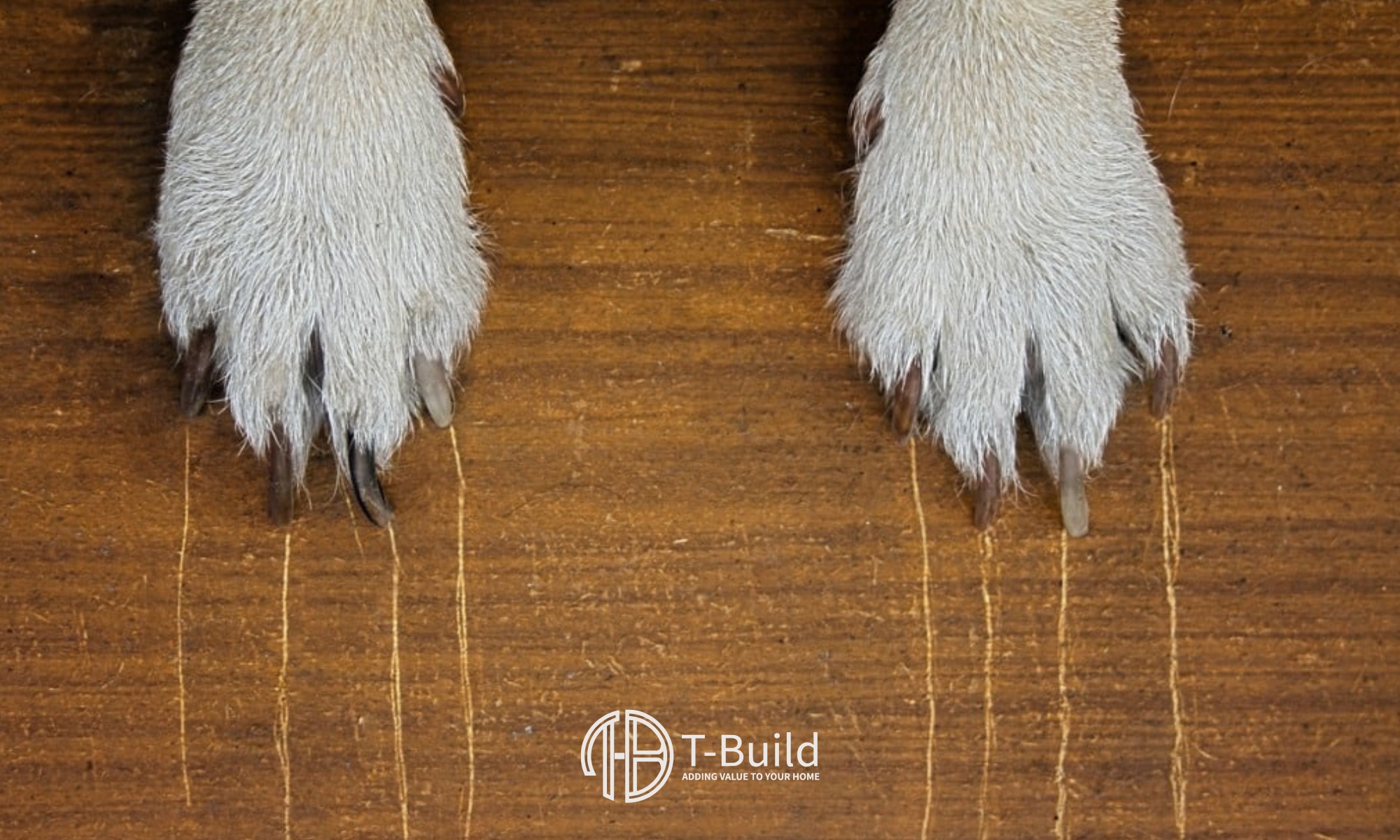
Durable: Scratch-resistant and water-resistant.
Low Maintenance: Easy to clean and maintain.
Cost-Effective: Cheaper than hardwood or engineered flooring.
Tools & Materials You’ll Need:
Herringbone LVT planks
Adhesive (if not using click-lock LVT)
Utility knife
Measuring tape
Chalk line
Spacers
Roller
Spirit level
Trowel or adhesive spreader
Underlay (if required by product type)
Step-by-Step Guide to Laying Herringbone LVT
1. Prepare the Subfloor
Ensure your subfloor is clean, level, dry, and smooth. Any bumps or moisture can cause issues with the final look and lifespan of your LVT.
2. Find the Centre Point
Use a chalk line to find the center of the room, both width-wise and length-wise. This will be your starting point to ensure the pattern is symmetrical.
3. Dry Lay the Pattern
Before applying adhesive, lay out a few rows dry to visualise the pattern and spacing. This also allows you to adjust for any awkward edges or cuts.
4. Apply Adhesive (If Needed)
For glue-down LVT, spread the adhesive evenly using a notched trowel. Wait for the adhesive to become tacky before laying the tiles.
Tip: If using click-lock LVT, no adhesive is needed, but you’ll still want to start from the center and work outward.
5. Start the Herringbone Pattern
Lay your first tile at a 45-degree angle from the center point. Each subsequent tile should interlock or align to form the classic zigzag pattern.
Tip: Use spacers around the edges to maintain expansion gaps.
6. Cut Edges to Fit
Use a sharp utility knife to cut edge tiles to fit along walls or corners. Measure carefully and cut with a straight edge for clean lines.
7. Roll the Floor
Once installed, roll over the floor with a floor roller to ensure strong adhesive bonding and a flat surface.
8. Finishing Touches
Install any trims or scotia beading, and remove spacers. Leave the floor to set for 24 hours before placing furniture.
FAQs About Laying Herringbone LVT
Can I lay herringbone LVT on concrete?
Yes, as long as the concrete is level, dry, and clean.
Is it harder to install than straight planks?
Herringbone requires more precise measuring and cutting, but with patience, it’s absolutely DIY-friendly.
Can I install herringbone LVT in kitchens and bathrooms?
Definitely! Just make sure your LVT is waterproof and suitable for high-moisture areas.
Conclusion
Installing herringbone LVT can seem complex, but with the right preparation and method, it’s a manageable project that delivers stunning results. Whether you’re a DIY enthusiast or want help from professionals, T-Build UK is here to assist with top-quality flooring solutions and expert installation services.
recent posts